
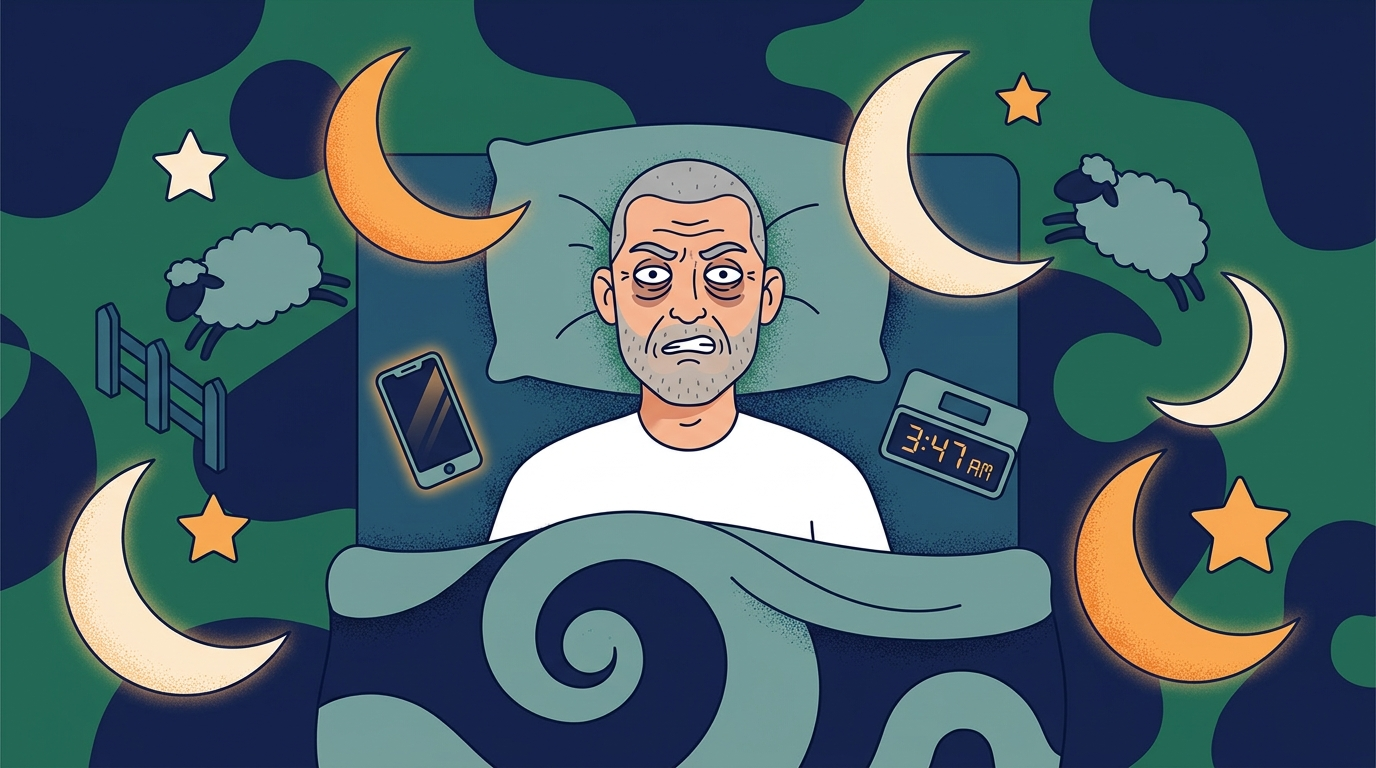
CBT for Insomnia: Why It Works Better Than Sleeping Pills for Many People
Summary: CBT-I, a specific form of CBT Therapy for insomnia, is recommended by clinical guidelines as the first-line treatment for chronic insomnia, ahead of sleeping pills. It works by addressing the habits and thought patterns that keep poor sleep going, producing improvements that tend to last well beyond the end of treatment. This article explains how CBT-I works, why it often outperforms medication long-term, and what a typical course of treatment looks like.
For many people struggling to sleep, a sleeping pill feels like the obvious solution. It’s quick, it’s familiar, and it works, at least for a night or two. But for chronic insomnia, the kind that persists for months or longer, the evidence points in a different direction. Cognitive Behavioural Therapy for Insomnia, or CBT-I, is now recommended as the first-line treatment by major clinical guidelines, often ahead of medication.
Here’s why.
What Is CBT-I?
CBT-I is a specific, structured form of CBT Therapy designed for chronic insomnia. Rather than targeting sleep directly, it targets the habits, routines, and thought patterns that build up around poor sleep and end up perpetuating it, things like spending too long in bed awake, worrying about the consequences of not sleeping, or developing an anxious relationship with bedtime itself. By changing these patterns, CBT-I helps restore the body’s natural drive to sleep.

Why CBT-I Often Outperforms Sleeping Pills
Sleeping pills can be genuinely useful for short-term or situational sleep problems, but they come with real limitations for chronic insomnia. Tolerance can build over time, meaning the same dose becomes less effective. Many people experience rebound insomnia when they stop taking them, sleep can temporarily worsen, which makes it hard to come off medication once started. Long-term use has also been linked to unwanted side effects, including daytime grogginess and dependency. CBT-I, by contrast, addresses the underlying patterns keeping insomnia going rather than sedating the body into sleep, which is why its benefits tend to last well after treatment ends, without the same risk of dependency or rebound.
What Happens in Treatment: A Step-by-Step Overview
1. Sleep assessment and a sleep diary. You’ll typically track your sleep patterns for one to two weeks, noting bedtimes, wake times, and night-time awakenings. This gives a CBT therapist a clear, accurate picture of your specific sleep pattern, rather than relying on memory alone.
2. Sleep restriction therapy. Counterintuitively, treatment often starts by limiting the time spent in bed to match actual sleep time. This builds up sleep pressure and consolidates sleep, which sounds harsh but tends to improve sleep efficiency fairly quickly.
3. Stimulus control. This aims to rebuild the association between bed and sleep, rather than bed and wakeful frustration, for example, only going to bed when sleepy, and getting up if you can’t sleep after roughly 20 minutes rather than lying awake.
4. Cognitive work. Insomnia often involves anxious or catastrophic thoughts about sleep itself, such as fear of the next day’s consequences. A CBT therapist will help you identify and challenge these thoughts, reducing the anxiety that tends to keep the brain alert at bedtime.
5. Sleep hygiene and relaxation. Practical changes around light, caffeine, screen use, and pre-bed routine are introduced, alongside relaxation techniques to help ease the body out of an alert, wakeful state.
6. Gradual adjustment and relapse prevention. As sleep improves, time in bed is gradually increased, and the final sessions focus on maintaining progress and knowing how to respond if sleep problems resurface in the future.
How Long Does CBT-I Take?
CBT-I is typically a short, structured treatment, often between 4 and 8 sessions. Many people notice improvements to sleep quality within the first few weeks, though it can take the full course of treatment for changes to feel stable and lasting.
What to Expect During Treatment
The early stages of CBT-I, particularly sleep restriction, can feel counterintuitive and even make you feel more tired before things improve. This is a normal, expected part of treatment, not a sign it isn’t working. A CBT therapist will guide the pace carefully and adjust the plan based on how your sleep responds, rather than applying a rigid, one-size-fits-all approach.
Is CBT-I the Right Fit for You?
CBT-I tends to suit people experiencing ongoing difficulty falling or staying asleep, particularly where the problem has lasted several months or longer. If your insomnia is linked to another condition, such as depression, anxiety, or chronic pain, a CBT therapist may address these alongside your sleep difficulties, or coordinate with other clinicians involved in your care. A good first session should involve a detailed look at your sleep pattern and an honest conversation about what’s realistic for your situation.
Frequently Asked Questions
Can I do CBT-I while still taking sleeping pills?
Often, yes, particularly at the start of treatment. Many people gradually reduce medication alongside CBT-I once their sleep starts to improve, ideally in coordination with the prescribing doctor, rather than stopping medication abruptly.
Will sleep restriction make me more tired at first?
Often yes, in the first week or two. This is expected and temporary. It reflects the treatment building up your natural sleep pressure, which typically leads to deeper, more consolidated sleep as the weeks go on.
Does CBT-I work for people who’ve had insomnia for years?
Yes. CBT-I has strong evidence even for long-standing, chronic insomnia. It doesn’t matter how long the difficulty has been present, as the treatment targets the current habits and thought patterns maintaining it, not how it originally started.
Is CBT-I available online, or does it need to be in person?
CBT-I can be delivered effectively either in person or online, and research suggests online-delivered CBT-I can produce comparable results for many people, which makes it a practical, flexible option.
What if my insomnia comes back after treatment ends?
Occasional disrupted sleep after treatment is normal, particularly during stressful periods. Because CBT-I teaches skills rather than relying on ongoing medication, most people are able to apply what they’ve learned to get sleep back on track without needing to restart treatment from scratch.
Not Sure If This Is What You’re Experiencing?
If you’re not sure whether what you’re experiencing fits chronic insomnia or something else, our Mental Health Symptom Compass can help you think it through. Simply describe what you’re experiencing, and it will suggest therapy directions worth exploring. Try the Symptom Compass →
About the Author
This article was written and reviewed by Alistair Bond, a Senior CBT Therapist at the CBT Clinic London. Alistair is fully accredited with the BABCP (British Association for Behavioural and Cognitive Psychotherapies) and has 25 years of experience working as a CBT therapist, including 13 years within the NHS before establishing his private practice. His clinical experience spans a wide range of anxiety, mood, and trauma-related difficulties, giving him a grounded, evidence-based perspective on what actually works in treatment.
Related Posts

We Are Nature
We humans are funny creatures. At some point in our lives we start thinking...

Mindfulness Meditation for Anxiety and Stress
If you are feeling stressed, anxious, have poor concentration, dwell on the...

The Signs and Symptoms of Depression
The Symptoms of Depression One of the most common questions we ask ourselves...

Does Cognitive Behavioural Therapy (CBT Therapy) and Mindfulness Help Pure O or Intrusive Thoughts?
Does CBT Therapy Cure Pure O or Intrusive Thoughts? Does CBT Therapy Cure...