
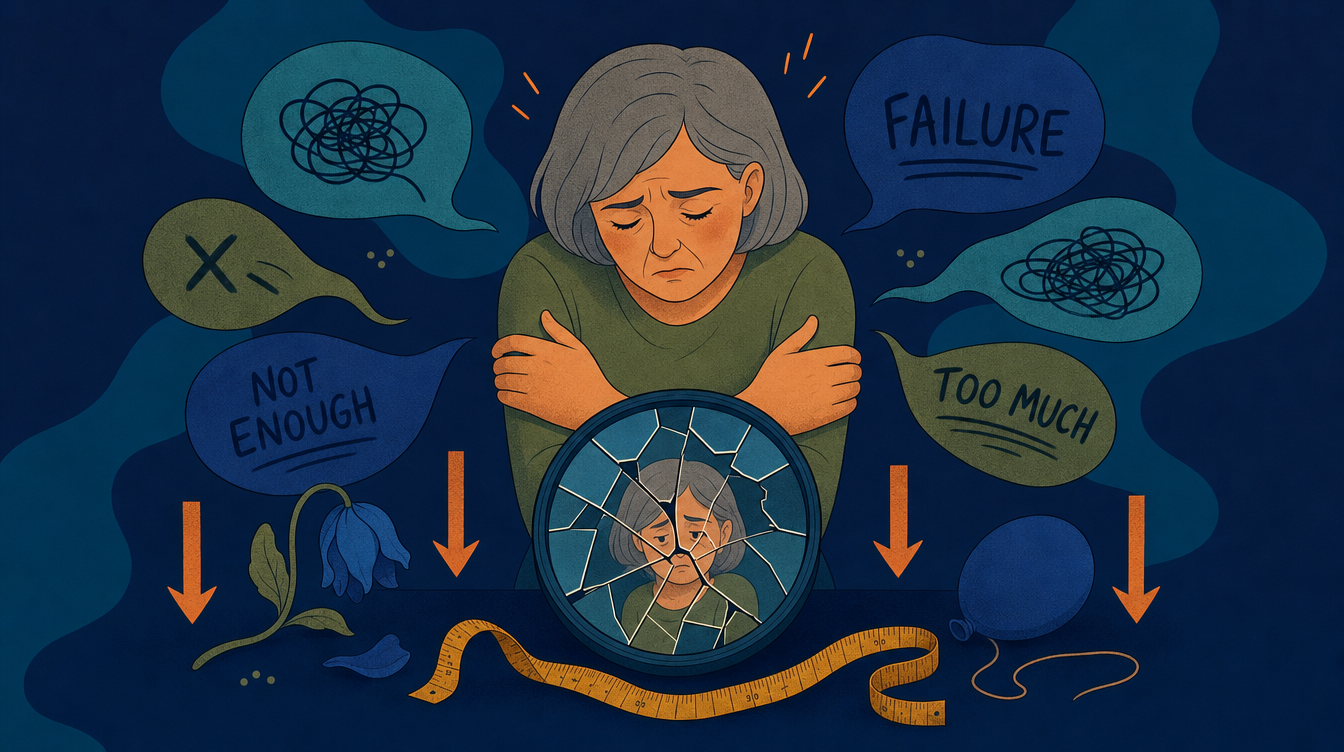
Building Self-Esteem From the Inside Out: A CBT Therapy Approach
Summary: Low self-esteem often develops from deep-rooted beliefs formed early in life, and tends to be maintained by patterns of self-criticism, unhelpful comparison, and avoidance. CBT Therapy addresses self-esteem at its root by identifying these core beliefs and gradually building evidence that challenges them. This article explains where low self-esteem comes from, how CBT Therapy approaches it, and what a typical course of treatment looks like.
Low self-esteem rarely responds well to being told to “just think more positively.” That advice tends to bounce off, because self-esteem isn’t really about individual thoughts, it’s about the deeper beliefs a person holds about their own worth. Genuinely rebuilding self-worth means working with those beliefs directly, which is exactly where CBT Therapy comes in.
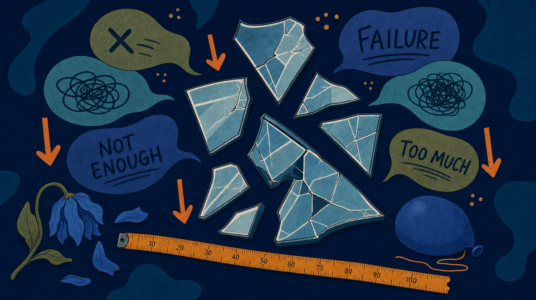
Shattered self‑esteem reflected in fragile pieces
What Low Self-Esteem Actually Looks Like
Low self-esteem isn’t simply a lack of confidence in one area, like public speaking or a particular skill. It tends to show up as a broader sense of not being good enough, likeable enough, or worthy enough, often paired with a harsh inner critic that’s quick to notice flaws and slow to acknowledge strengths. It can drive people to over-apologise, avoid opportunities out of fear of failure or judgement, seek constant reassurance, or struggle to accept compliments or achievements as genuine.
Where Low Self-Esteem Comes From
Self-esteem is usually shaped early, through childhood experiences, relationships, and messages received from caregivers, teachers, or peers. Criticism, neglect, comparison to others, or conditional approval (feeling loved or valued only under certain conditions) can all contribute to the formation of negative “core beliefs” about the self, such as “I’m not good enough” or “I’m unlovable.” These beliefs often go unexamined for years, quietly shaping how someone interprets everyday events well into adulthood.
Why Low Self-Esteem Persists
Once a negative core belief takes hold, the mind tends to look for evidence that confirms it and dismiss evidence that contradicts it. A mistake at work feels like proof of inadequacy, while a success gets written off as luck or a fluke. Avoidance also plays a role: steering clear of situations where self-worth feels at risk (like putting yourself forward for something, or being vulnerable in a relationship) feels protective in the moment, but it also prevents the belief from ever being properly tested or updated.
How CBT Therapy Approaches Self-Esteem
1. Identifying core beliefs. A CBT therapist will help you uncover the underlying beliefs driving your self-esteem difficulties, often beliefs that have felt so familiar for so long they’ve never been questioned.
2. Understanding the maintenance cycle. Together, you’ll map out how self-critical thoughts, unhelpful behaviours (like avoidance or reassurance-seeking), and low mood interact to keep low self-esteem going, giving you a clear picture of your own specific pattern.
3. Challenging the inner critic. You’ll learn to notice self-critical thoughts as they happen and examine them for accuracy, rather than accepting them automatically as fact.
4. Building a balanced self-view through evidence. Rather than replacing negative beliefs with forced positivity, CBT Therapy helps you actively collect and record evidence, past and present, that challenges the old belief and supports a more balanced, realistic view of yourself.
5. Behavioural experiments. Gradually testing out avoided situations, such as accepting an opportunity, expressing an opinion, or setting a boundary, gives you direct, lived evidence that challenges old assumptions more powerfully than thinking alone ever could.
6. Consolidation and relapse prevention. Toward the end of treatment, you’ll work on recognising early warning signs of old patterns creeping back, and build a personal plan for maintaining a more balanced self-view going forward.
How Long Does Treatment Take?
Treatment for low self-esteem varies more than some other conditions, since deeply held core beliefs can take time to shift. Many people work with a CBT therapist for somewhere between 12 and 20 sessions, though this depends on how long-standing the beliefs are and whether other difficulties, such as anxiety or depression, are also being addressed.
What to Expect Emotionally
Examining long-held beliefs about yourself can bring up real discomfort, sometimes sadness, sometimes resistance to letting go of a familiar (if painful) story about who you are. This is a completely normal part of the process. A good CBT therapist will go at a pace that feels manageable and will focus on building evidence gradually, rather than expecting a shift in self-worth to happen overnight.
Is CBT Therapy the Right Fit for You?
CBT Therapy tends to suit people who want a structured, practical approach and are willing to actively test out new behaviours between sessions, not just talk through difficulties. If your self-esteem difficulties are closely tied to a specific past experience, such as bullying, trauma, or a difficult relationship, a CBT therapist may draw on additional approaches alongside CBT Therapy. A good first session should involve a clear conversation about where your self-esteem difficulties come from and what a realistic path forward looks like.
Frequently Asked Questions
Is low self-esteem a mental health condition on its own?
Low self-esteem isn’t a standalone diagnosis, but it’s closely linked to conditions like depression, anxiety, and eating difficulties, and can significantly affect quality of life even without a formal diagnosis attached. It’s a legitimate reason to seek support in its own right.
Can low self-esteem come back after treatment?
Old patterns of self-criticism can resurface, particularly during stressful periods or setbacks. This is why relapse prevention is built into treatment, so you leave with tools to recognise and respond to these moments rather than being caught off guard by them.
Is it normal to feel worse before feeling better?
It can happen, particularly in early sessions when long-held beliefs are first being examined. This isn’t a sign that treatment is failing. A CBT therapist will check in regularly and adjust the pace to make sure the process feels manageable.
Does low self-esteem always come from childhood?
Often, but not always. While childhood experiences are a common root, self-esteem can also be significantly affected by later experiences, such as a difficult relationship, workplace bullying, or a major life setback. CBT Therapy works with whatever beliefs and experiences are actually relevant to you.
Will I need to talk about my whole childhood in detail?
Not necessarily. CBT Therapy tends to focus more on identifying and working with the beliefs themselves in the present, rather than extensive exploration of the past, though understanding where a belief originated can sometimes help make sense of why it feels so persistent.
Not Sure If This Is What You’re Experiencing?
If you’re not sure whether what you’re experiencing fits low self-esteem or something else, our Mental Health Symptom Compass can help you think it through. Simply describe what you’re experiencing, and it will suggest therapy directions worth exploring. Try the Symptom Compass →
About the Author
This article was written and reviewed by Alistair Bond, a Senior CBT Therapist at the CBT Clinic London. Alistair is fully accredited with the BABCP (British Association for Behavioural and Cognitive Psychotherapies) and has 25 years of experience working as a CBT therapist, including 13 years within the NHS before establishing his private practice. His clinical experience spans a wide range of anxiety, mood, and trauma-related difficulties, giving him a grounded, evidence-based perspective on what actually works in treatment.
Related Posts

For a Nicer Life -Let Go of Expectations
When it comes to meditation it is very important to let go of the...
CBT for Insomnia: Why It Works Better Than Sleeping Pills for Many People
CBT for Insomnia (CBT‑I) is the recommended first‑line treatment for chronic...

Does Cognitive Behavioural Therapy (CBT Therapy) and Mindfulness Help Pure O or Intrusive Thoughts?
Does CBT Therapy Cure Pure O or Intrusive Thoughts? Does CBT Therapy Cure...

Online CBT Therapy – Everything You Need To Know
Online CBT Therapy – Everything You Need To Know Online CBT Therapy is the...