
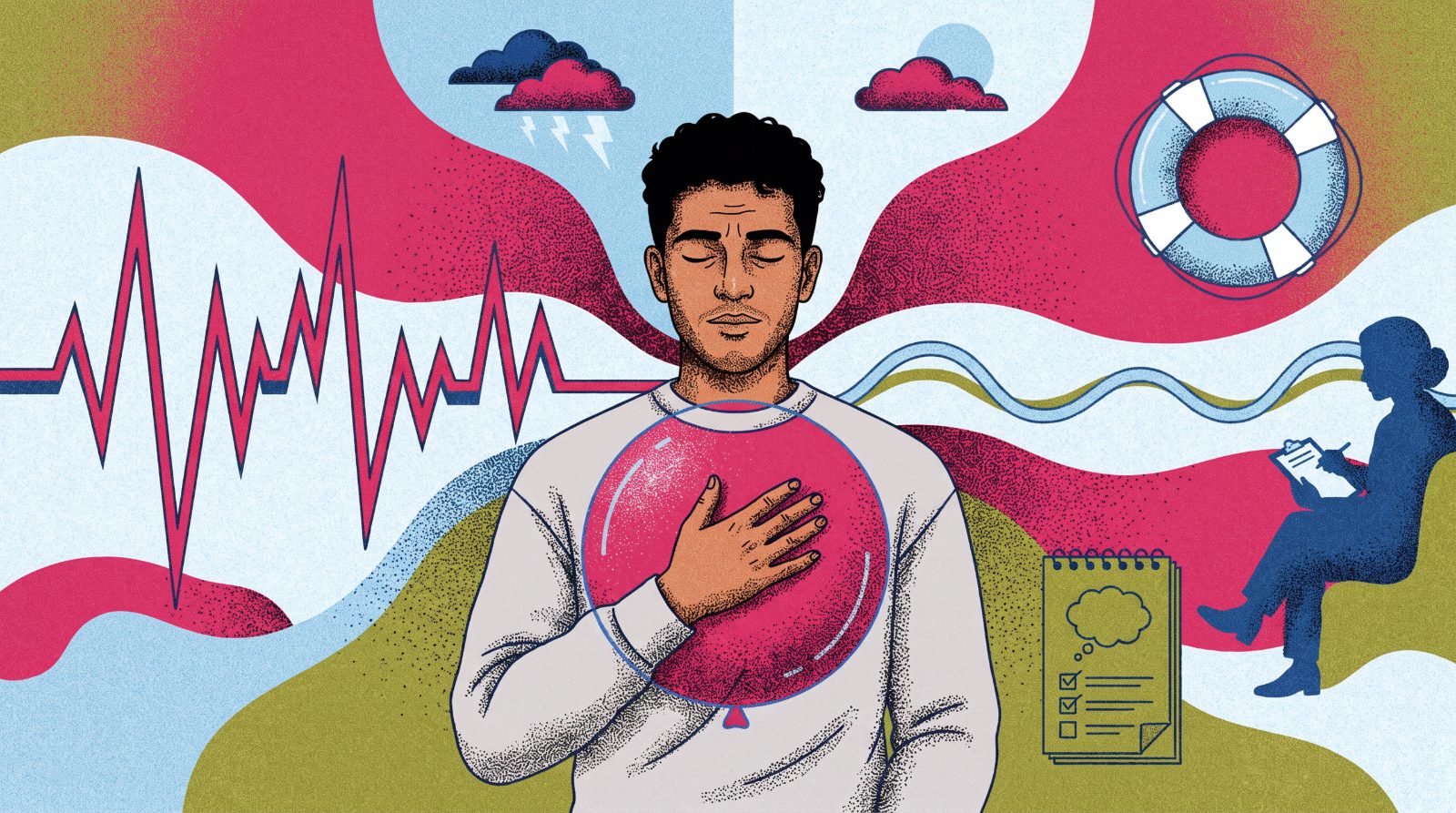
Anxiety Attacks: How a CBT Therapist Can Help You Stop Them
Anxiety Attacks: How a CBT Therapist Can Help You Stop Them
Summary: Anxiety attacks, sometimes called panic attacks, can feel frightening and out of control, but they are highly treatable. A CBT Therapist helps you understand why they happen, what keeps them coming back, and how to change the thoughts and behaviours that fuel them. This article explains what an anxiety attack is, why it keeps happening, what CBT Therapy involves step by step, what you can do in the moment, and how to find a qualified CBT Therapist.
Your heart starts pounding. Your chest feels tight, your breathing speeds up, and a wave of fear rises from nowhere. You may feel dizzy, shaky or detached from your surroundings, and a frightening thought arrives: “Something is terribly wrong”, or “I’m going to lose control”. If this sounds familiar, you are not alone, and you are not going mad. These are anxiety attacks, and a CBT Therapist can help you stop them.
This article explains what is happening in your body and mind during an anxiety attack, why the attacks tend to keep returning, and how CBT Therapy treats them.
What Is an Anxiety Attack?
“Anxiety attack” is a common, everyday phrase for a sudden surge of intense fear or anxiety, often with strong physical symptoms. It is not a formal diagnosis. The closest clinical term is a panic attack, and when panic attacks keep happening and people begin to dread the next one, this may be panic disorder. Many people use the two terms for the same experience, and CBT Therapy treats both in a similar way.
Common symptoms include:
- A pounding or racing heart
- Shortness of breath, or a feeling of choking
- Chest tightness or discomfort
- Dizziness, light-headedness or feeling faint
- Trembling, sweating, hot or cold flushes
- Tingling or numbness in the hands or face
- Nausea or an unsettled stomach
- Feeling detached from yourself or your surroundings
- Fear of losing control, going mad, or dying
These attacks usually peak within a few minutes and then ease, although the feeling of being drained can last longer. Because the symptoms are so physical, many people understandably worry that something is medically wrong. If you have never had these symptoms checked, or if you have chest pain, it is sensible to see your GP first.
Why Do Anxiety Attacks Keep Happening?
An anxiety attack begins with the body’s natural alarm system, often called the fight-or-flight response. It floods the body with adrenaline to prepare you to deal with danger. That is useful if the danger is real, but in an anxiety attack the alarm goes off when there is no external threat.
What turns a single frightening experience into a pattern is usually what happens next. CBT Therapy understands this as a cycle:
The trigger. Something sets off a bodily sensation, such as a racing heart after coffee, a stuffy room, stress, or sometimes nothing obvious at all.
The catastrophic thought. The sensation is interpreted as a sign of danger: “I’m having a heart attack”, “I’m going to faint”, “I’m losing control”.
The surge of fear. The frightening thought triggers more adrenaline, and the symptoms get stronger, which seems to confirm the fear.
The safety behaviours. You try to protect yourself by escaping the situation, avoiding places, carrying medication or water, sitting near exits, or checking your pulse. These bring short-term relief.
The aftermath. You stay on guard for the next attack, and the avoidance and watchfulness keep the cycle going. The fear of having another attack can become as distressing as the attacks themselves.
Seeing this cycle laid out clearly is often a turning point. The attacks are frightening, but they are not dangerous, and the pattern that keeps them going can be changed.
Why See a CBT Therapist for Anxiety Attacks?
CBT Therapy is one of the best-evidenced treatments for panic and anxiety attacks, and UK clinical guidance recommends CBT as a first-line treatment for panic disorder. A CBT Therapist does not simply teach you to cope with attacks. They help you understand why they happen and work with you to change the thinking patterns and behaviours that maintain them, so that the attacks lose their power.
Because CBT Therapy is structured and skills-based, many people find it gives them tools they keep using long after treatment ends.
What Happens in CBT Therapy: A Step-by-Step Overview
1. Assessment. A CBT Therapist will ask about your attacks, how often they happen, what you notice, and how they affect your life. They will also check whether there are medical factors that should be discussed with your GP.
2. Building your personal cycle. Together you map a recent attack in detail, including the trigger, bodily sensations, thoughts, feelings and what you did. This gives you a clear picture of what keeps your attacks going.
3. Understanding the body’s alarm system. You learn why the symptoms occur, why they are uncomfortable but not dangerous, and how adrenaline produces each one. Understanding this alone often reduces the fear.
4. Spotting catastrophic thoughts. You learn to catch the frightening interpretations that feed an attack, such as “This is a heart attack”, and to look at the evidence for and against them.
5. Testing your predictions. Using carefully planned behavioural experiments, you test what actually happens when you face a feared sensation or situation without protecting yourself. For example, you might deliberately bring on harmless sensations, such as breathing quickly, in the session, and see that they pass without harm.
6. Dropping safety behaviours. You gradually stop the habits that give short-term relief but keep the fear alive, such as escaping, avoiding, or constantly checking your body.
7. Returning to avoided places and activities. At a pace you agree, you go back to the places or activities you have been avoiding, learning that you can cope with them.
8. Relapse prevention. Towards the end of treatment, you build a plan for staying well, including how to respond if a wobble or an attack returns under stress.
What Can You Do During an Anxiety Attack?
A CBT Therapist will usually work on long-term change, but a few principles can help in the moment:
- Remind yourself that this is an anxiety attack, that it is unpleasant but not dangerous, and that it will pass.
- Try not to fight it or run from it. Fighting the sensations tends to make them stronger.
- Slow your breathing gently, if you find it helps, without forcing it.
- Ground yourself by naming things you can see, hear and touch around you.
- Stay where you are if it is safe to do so. Staying put and letting the wave pass teaches your brain that you can cope.
These steps can help you feel steadier, but they work best alongside treatment that tackles the thoughts and behaviours behind the attacks.
A Worked Example
Imagine someone who has their first anxiety attack on a crowded train. Their heart pounds, they feel dizzy, and they think they are about to collapse. They get off at the next stop, and the feeling passes. From then on they avoid trains, and begin to scan their body for signs of another attack, which makes them feel more anxious.
In CBT Therapy, they learn that their racing heart was adrenaline, and that fainting was very unlikely, because adrenaline raises blood pressure rather than lowering it. They plan a gradual return to the train, first for one stop, then two, staying put when the anxiety rises. Each time, the anxiety peaks and falls, and their confidence grows. Over time the attacks become less frequent and less intense.
When Should You See a CBT Therapist?
It is worth seeking help from a CBT Therapist if:
- Your anxiety attacks keep coming back, or you are worried about the next one.
- You are avoiding places, people or activities because of the fear.
- The attacks are affecting your work, relationships, sleep or daily life.
- You have been coping alone for a while and are not improving.
If you have severe chest pain, difficulty breathing that does not settle, or you are worried about your safety or thinking about harming yourself, seek urgent medical help, contact your GP or NHS 111, or call 999 in an emergency.
How to Find a Good CBT Therapist
When choosing a CBT Therapist, it helps to look for:
- Accreditation with the British Association for Behavioural and Cognitive Psychotherapies (BABCP), which sets professional standards for CBT Therapists in the UK.
- Experience treating anxiety and panic specifically.
- A clear, structured approach, with an explanation of what treatment will involve.
- A style that feels comfortable, since the working relationship matters.
It is reasonable to ask about a CBT Therapist’s training, accreditation and experience before you begin.
How Long Does CBT Therapy Take?
The length of treatment varies depending on how long the attacks have been happening, how severe they are, and whether other difficulties are involved. Many people notice real improvement within the first few sessions as the cycle becomes clear and they start to test their fears, and treatment is often completed within a few months of regular sessions. Between sessions you will usually practise what you have learned in daily life, and this practice is where much of the change happens.
If you would like support, find out more about CBT Therapy in London with our experienced CBT Therapists.
Frequently Asked Questions
Can a CBT Therapist cure anxiety attacks?
Many people stop having anxiety attacks altogether after CBT Therapy, and most notice a large reduction in how often they happen and how frightening they feel. The aim is not just to cope with attacks, but to change the patterns that cause them, so that you feel more in control and less afraid of them returning.
Is an anxiety attack the same as a panic attack?
The terms are often used for the same thing. “Panic attack” is the clinical term, and “anxiety attack” is the everyday phrase. Either way, CBT Therapy treats them in a similar way.
How do I know it’s an anxiety attack and not a heart problem?
The symptoms can feel alike, which is why many people are frightened by them. If you have never been checked, or if you have chest pain, see your GP to rule out medical causes. If a doctor has confirmed that your heart is healthy, a CBT Therapist can help you understand and treat the anxiety.
Do I need medication as well as CBT Therapy?
Some people take medication alongside or instead of CBT Therapy, and this is a decision to make with your GP or prescriber. CBT Therapy is effective in its own right, and a CBT Therapist can work alongside any medication you are taking.
Can I see a CBT Therapist online for anxiety attacks?
Yes. Many people have CBT Therapy for anxiety and panic by video, and research suggests that therapist-supported online CBT Therapy produces effects very similar to face-to-face treatment. A CBT Therapist can help you decide which format suits you.
Unsure Which Therapy You Need?
If you’re not sure whether what you’re experiencing is an anxiety attack, panic disorder or something else, our Mental Health Symptom Compass can help you think it through. Simply describe what you’re experiencing, and it will suggest therapy directions worth exploring. Try the Symptom Compass →
About the Author
This article was written and reviewed by Alistair Bond, a Senior CBT Therapist at the CBT Clinic London. Alistair is fully accredited with the BABCP (British Association for Behavioural and Cognitive Psychotherapies) and has 25 years of experience working as a CBT Therapist, including 13 years within the NHS before establishing his private practice. His clinical experience spans a wide range of anxiety, mood, and trauma-related difficulties, giving him a grounded, evidence-based perspective on what actually works in treatment.
Related Posts

Past and Present Focus in CBT Therapy
Past and Present Focus in CBT Therapy Although CBT is a therapy that...

Meditation for Stress and Anxiety – Canary Wharf, East London
For information about our meditation classes in Canary Wharf, East London email...

Getting Some Perspective on Your Life
Getting Some Perspective on Your Life The funny things about us human...

Online CBT Therapy vs Face-to-Face: Is One More Effective Than the Other?
Online CBT Therapy vs Face-to-Face: Is One More Effective Than the...