
CBT Therapy for Health Anxiety in London
Effective Treatment For: Anxiety
HEALTH ANXIETY:
Health anxiety (sometimes called hypochondrias) is when you spend so much time worrying you’re ill, or about getting ill, that it starts to take over your life.
Check if you have health anxiety
You may have health anxiety if you:
- constantly worry about your health
- frequently check your body for signs of illness, such as lumps, tingling or pain
- are always asking people for reassurance that you’re not ill
- worry that your doctor or medical tests may have missed something
- obsessively look at health information on the internet or in the media
- avoid anything to do with serious illness, such as medical TV programmes
- act as if you were ill (for example, avoiding physical activities)
Anxiety itself can cause symptoms like headaches or a racing heartbeat, and you may mistake these for signs of illness.
Some of the techniques in our 5 Ways to Stop Worrying guide, such as the Worry Tree and Worry Hour, can also help with health worries.
Are you suffering from Anxiety? Take our Online Anxiety Assessment and make the first step towards recovery.
Patient Quote
“Before I had CBT Therapy I was so anxious as I just couldn’t stop worrying about my children. It was causing problems for me and them. I was texting them all the time to see if they were safe. Thanks to the CBT Therapy I learned to manage my worry and worry less. Things are so much better now for me and my kids. I’m so much less anxious and my children are free again to live their lives.”
Sue, IT Manager
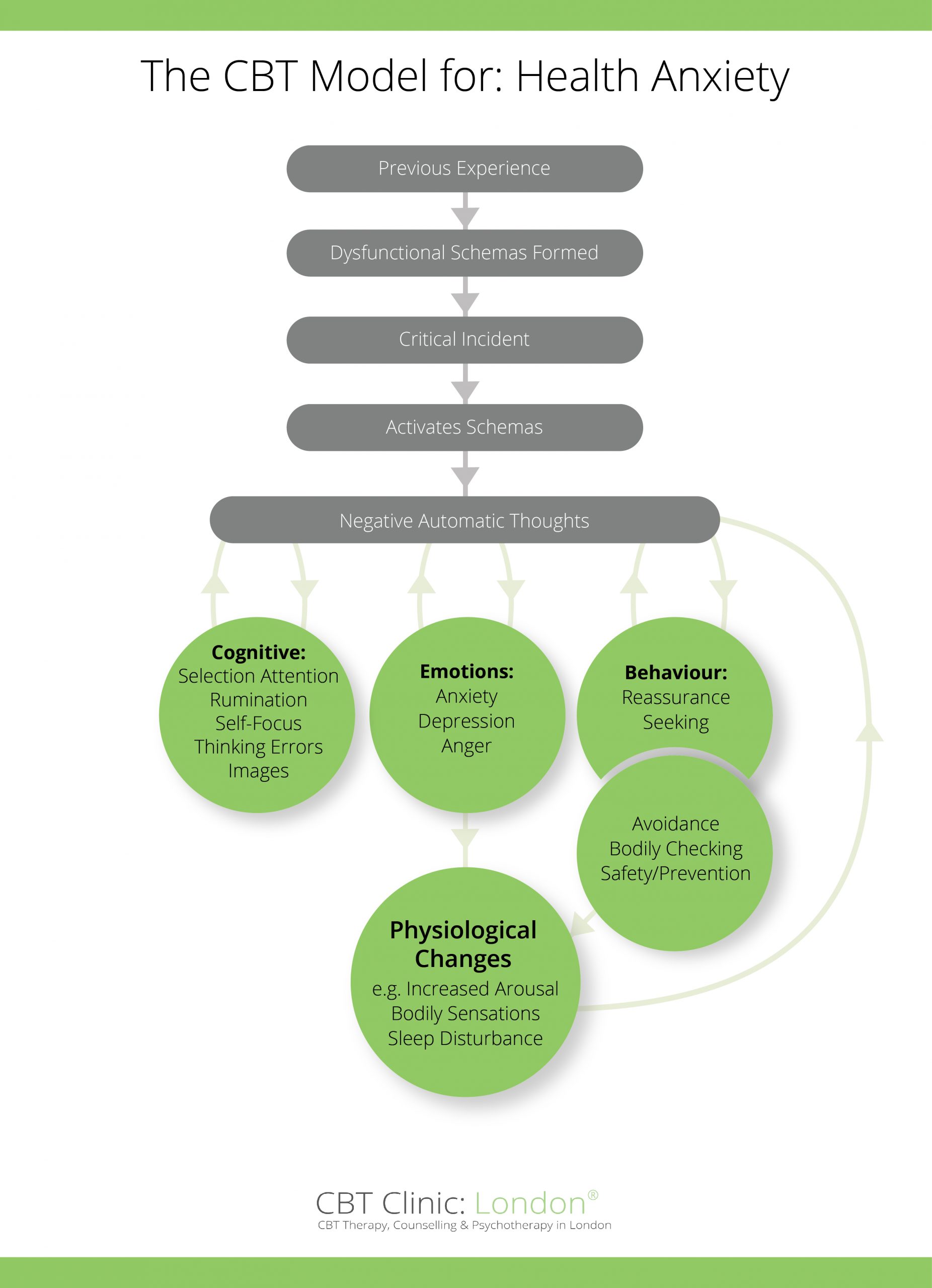
Health anxiety usually starts with something ordinary: a headache, a skipped heartbeat, a lump you had not noticed before, or a news story about someone falling ill. The sensation itself is rarely the problem. What turns it into health anxiety is the meaning we give it. A thought such as “What if this is cancer?” or “What if they missed something?” triggers a rush of anxiety, and anxiety itself produces physical symptoms such as a racing heart, tight chest, tingling or dizziness, which seem to confirm the fear.
To feel safe, most people then do something to check or reduce the threat:
- checking the body repeatedly, pressing on lumps or monitoring the pulse
- searching symptoms online
- asking family, friends or doctors for reassurance
- booking repeated appointments or tests
- avoiding anything that reminds them of illness, such as health programmes, hospitals or even routine check-ups
Each of these brings brief relief, but the doubt soon returns, often stronger than before. Checking keeps attention focused on the body, online searches turn up worst-case scenarios, and reassurance only works until the next “what if”. Over time the cycle can take up hours of the day and put a strain on work and relationships.
Health anxiety can affect anyone, and it is not a sign that you are weak or attention-seeking. It often begins after a stressful health event, such as a frightening diagnosis, the illness or death of someone close, or a medical problem that was missed in the past. Some people grow up in families where illness was a frequent worry, and periods of general stress can make it worse. Health anxiety is closely related to obsessive-compulsive disorder (OCD), and many people who struggle with it also find uncertainty very hard to tolerate.
CBT Therapy is the most widely used and best-researched psychological treatment for health anxiety, and large UK trials have found it to be considerably more effective than standard medical care alone. Rather than trying to prove that you are not ill, which can never be done with complete certainty, CBT Therapy helps you change your relationship with health worries so they lose their grip.
With a CBT Therapist, treatment typically involves:
- Understanding your cycle. Together you map out the triggers, thoughts, sensations and checking that keep your health anxiety going.
- Making sense of physical symptoms. You learn how anxiety, attention and normal body changes can create sensations that feel alarming but are harmless.
- Testing your fears. You look at the evidence for your worries and try out balanced, realistic alternatives.
- Reducing checking and reassurance. Step by step, you cut back on body checking, online searching and reassurance-seeking, and discover that the anxiety settles on its own.
- Facing what you avoid. Gradually you return to things you have been avoiding, such as health news, hospitals or appropriate medical appointments.
- Living with uncertainty. You build your ability to tolerate the normal uncertainty that comes with having a body, so a new sensation no longer sets off the whole cycle.
- Staying well. Towards the end of treatment, you create a plan for handling future health scares without falling back into old habits.
For a step-by-step guide to what treatment involves, read our article CBT Therapy for Health Anxiety: What to Expect From Treatment.
- Keep a diary. Note when you worry about your health, what triggered it and what you did next. Patterns often become clear within a week or two.
- Notice your checking. Count how often you check your body, search online or ask for reassurance, then try to reduce it gradually.
- Delay the search. When you feel the urge to look up a symptom, postpone it for an hour. The urge usually fades.
- Try a Worry Hour. Set aside a fixed time each day for health worries rather than giving them your whole day. Our 5 Ways to Stop Worrying guide explains how.
CBT Therapy for health anxiety works alongside your medical care, not instead of it. If you have a new symptom, or one that is persistent or getting worse, it is always sensible to have it checked by your GP. Once medical causes have been looked at, a CBT Therapist can help you manage the worry that remains. If health worries are stopping you living a normal life, or self-help has not worked, it is a good time to get support.
Is health anxiety the same as hypochondria?
Yes. Health anxiety is the term now used for what used to be called hypochondria. Many people prefer it, as it describes the problem more accurately and without judgement.
Will my CBT Therapist tell me my symptoms are not real?
No. Your symptoms are real, and so is the distress they cause. CBT Therapy focuses on how you interpret and respond to symptoms, not on dismissing them.
Can I have health anxiety and a physical health condition?
Yes. Health anxiety is common in people with long-term or past medical conditions. CBT Therapy can help you take sensible care of your health without being ruled by fear.
Book a Free Consultation
We offer a free 15-minute consultation over Zoom, so you can talk things through with a CBT Therapist and find out whether CBT Therapy is right for you. Book your free Zoom consultation → or call 020 7157 9924.
Not Sure If This Is What You’re Experiencing?
If you’re not sure whether your worries are health anxiety, generalised anxiety or something else, our Mental Health Symptom Compass can help you think it through. Simply describe what you’re experiencing, and it will suggest therapy directions worth exploring. Try the Symptom Compass →
CBT Therapist London
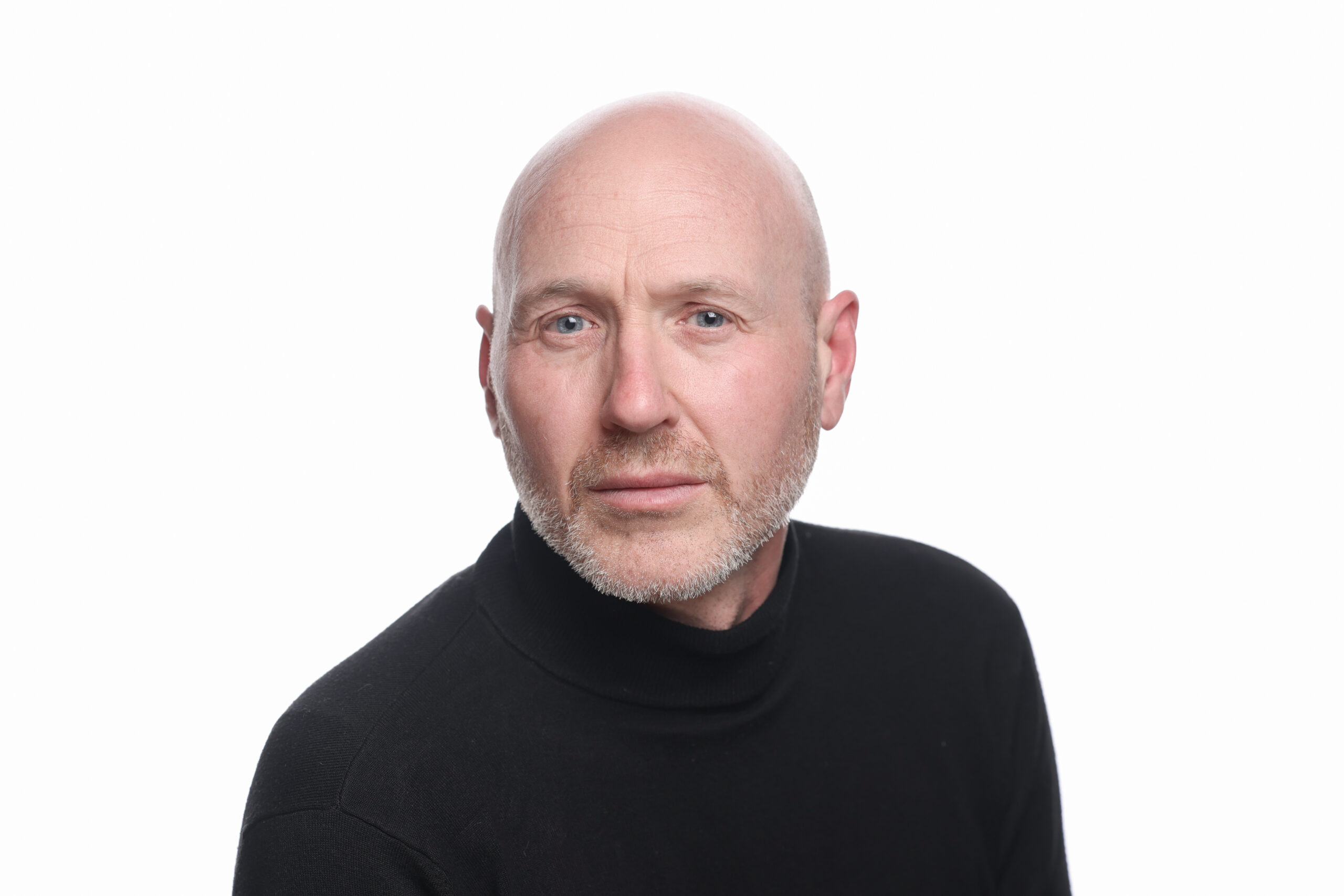
This article was curated by Alistair Bond – Senior CBT Therapist in London. He is the Clinical Director of the CBT Clinic London and he specialises in treating health anxiety with CBT Therapy.
If you or a loved one are struggling with health anxiety, please get in touch with us. You can call our friendly reception team on 0207 157 9924, email info@cbtcliniclondon.com or simply fill out our new patient registration form and we’ll get back to you.
Online or Face to Face CBT Therapy?
We offer CBT Therapy either Online or Face to Face in our London Clinic. We also offer the option to combine both to suit your lifestyle and preference.