
Harm, Sexual, or Religious Intrusive Thoughts: How CBT Therapy Helps With Pure O
Summary: Pure O, sometimes called “purely obsessional” OCD, involves distressing intrusive thoughts, often about harm, sexual topics, or religious and moral concerns, alongside hidden mental compulsions rather than visible rituals. These thoughts are a well-recognised symptom of OCD and do not reflect a person’s true desires or character. This article explains what’s happening, why these particular themes are so common, and how CBT Therapy, including ERP, helps.
One of the most distressing aspects of Pure O is the content of the thoughts themselves. Unwanted thoughts about harming someone, disturbing sexual images, or fears of committing a moral or religious wrongdoing can feel shameful, frightening, and completely at odds with who someone actually is, which is often exactly why they cause so much distress. It’s important to say clearly at the outset: these thoughts are a recognised symptom of OCD, not a reflection of hidden desires or a sign that someone is dangerous.

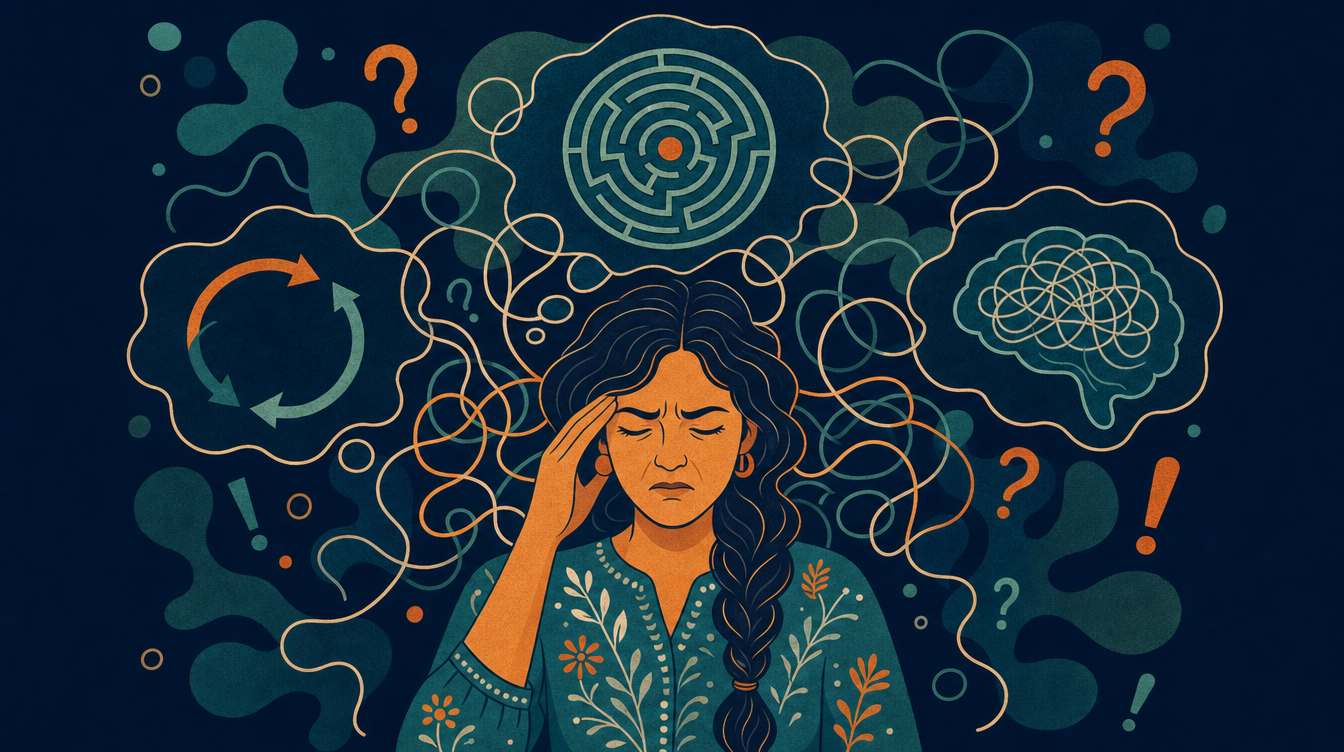
Pure O can feel like a maze — looping thoughts, no clear exit. But every step toward understanding your mind brings you closer to the center, where clarity lives.
What Is Pure O?
“Pure O” is a commonly used term for a presentation of OCD where compulsions are largely mental rather than physical or visible. Instead of checking, washing, or arranging things, a person may mentally review events, silently seek reassurance from themselves, avoid certain people, places, or situations, or try to “neutralise” a thought with a counter-thought or prayer. Because these compulsions happen internally, Pure O is often misunderstood, missed by others, or even misdiagnosed, despite being just as real and treatable as more visibly ritualistic OCD.
Why These Specific Themes Are So Common
Intrusive thoughts about harm, sexual content, or religious and moral concerns are among the most common OCD themes, and there’s a clear reason why. OCD tends to fixate on whatever a person cares about most and finds most unacceptable to their own values. A caring parent might experience intrusive thoughts about harming their child. A deeply religious person might experience blasphemous thoughts. Someone who values their sexuality and relationships might experience unwanted, disturbing sexual intrusions. The distress these thoughts cause is, ironically, evidence of how strongly they conflict with a person’s actual character, not evidence that they reflect true desires.
Why the Compulsions Keep the Cycle Going
The mental compulsions in Pure O, checking whether a thought “means something,” seeking reassurance (from others or from your own mind), avoiding triggers, or trying to suppress or replace the thought, all provide brief relief but ultimately reinforce the idea that the thought is dangerous and needs managing. This keeps the brain on high alert for the thought, which paradoxically tends to make it appear more, not less, often described as the classic “don’t think about a white bear” effect.
How CBT Therapy Treats Pure O
1. Assessment and formulation. A CBT therapist will explore your specific intrusive thoughts, the mental compulsions you engage in, and any avoidance, building a clear picture of your particular cycle. Being able to describe the thoughts openly in a non-judgemental space is often, in itself, a relieving first step.
2. Psychoeducation. You’ll learn that intrusive thoughts are a normal feature of human cognition experienced by almost everyone; the difference in OCD is the meaning attached to them, and the compulsive response that follows.
3. Identifying mental compulsions. Because these compulsions are often invisible even to the person doing them, treatment involves carefully identifying subtle patterns like mental reviewing, thought-neutralising, or silent reassurance-seeking.
4. Exposure and Response Prevention (ERP). Adapted for Pure O, this typically involves deliberately allowing the intrusive thought to be present without engaging in the usual mental compulsion or avoidance, teaching the brain that the thought itself is not dangerous and doesn’t need to be managed.
5. Reducing reassurance-seeking. Whether reassurance comes from other people, the internet, or your own mind, gradually reducing this habit is a key part of breaking the cycle, even though it can feel uncomfortable at first.
6. Relapse prevention. Toward the end of treatment, you’ll build a plan for managing any future flare-ups, since intrusive thoughts don’t disappear entirely, they simply stop being given the same weight or meaning.
How Long Does Treatment Take?
Treatment for Pure O typically follows a similar structure to ERP for other OCD presentations, often between 12 and 20 sessions, though this varies depending on symptom severity and how entrenched the mental compulsions have become.
What to Expect Emotionally
Talking openly about intrusive thoughts, particularly ones involving harm, sexual content, or religious themes, can feel deeply uncomfortable at first, often because of shame or fear of being judged. A good CBT therapist has heard these themes many times before and will respond without judgement, treating them as the well-recognised OCD symptom they are. Most people find significant relief simply in discovering that what they’re experiencing is a known, treatable pattern, not a reflection of who they are.
Is CBT Therapy the Right Fit for You?
CBT Therapy, and ERP in particular, is well suited to Pure O when a person is ready to engage actively with the process, including sitting with some discomfort as part of treatment. A good first session should involve a clear, judgement-free conversation about your specific thoughts and compulsions, and an explanation of how ERP would be adapted to a largely mental presentation of OCD.
Frequently Asked Questions
Do intrusive thoughts about harm mean I might act on them?
No. Intrusive thoughts in OCD are ego-dystonic, meaning they go against a person’s actual values and desires, which is precisely why they cause such distress. The distress itself is a strong indicator that these thoughts don’t reflect intent.
Is it normal to feel too ashamed to talk about these thoughts?
Very much so, and it’s one of the most common barriers to seeking help for Pure O. A CBT therapist experienced in treating OCD will have heard similar themes many times before and will approach them factually and without judgement.
Why do I keep mentally checking whether I’m a bad person?
This is a common mental compulsion in Pure O, an attempt to gain certainty about something OCD makes feel urgently uncertain. Treatment helps you recognise this checking as a compulsion in itself, rather than a necessary or helpful process.
Can Pure O involve more than one theme at once?
Yes, it’s common for harm, sexual, and religious or moral themes to overlap, or to shift over time. Treatment focuses on the underlying process, the obsession-compulsion cycle, rather than needing to address each theme separately from scratch.
Will my CBT therapist think differently of me because of my thoughts?
A CBT therapist experienced in treating OCD understands that intrusive thoughts are a symptom, not a reflection of character. Being open about the content of your thoughts, however distressing, is a necessary and safe part of getting the right treatment.
Not Sure If This Is What You’re Experiencing?
If you’re not sure whether what you’re experiencing fits Pure O or something else, our Mental Health Symptom Compass can help you think it through. Simply describe what you’re experiencing, and it will suggest therapy directions worth exploring. Try the Symptom Compass →
About the Author
This article was written and reviewed by Alistair Bond, a Senior CBT Therapist at the CBT Clinic London. Alistair is fully accredited with the BABCP (British Association for Behavioural and Cognitive Psychotherapies) and has 25 years of experience working as a CBT therapist, including 13 years within the NHS before establishing his private practice. His clinical experience spans a wide range of anxiety, mood, and trauma-related difficulties, giving him a grounded, evidence-based perspective on what actually works in treatment.
Related Posts
Harm, Sexual, or Religious Intrusive Thoughts: How CBT Therapy Helps With Pure O
Pure O, or “purely obsessional” OCD, involves intrusive thoughts about harm,...

Antidepressant Medications: What are they?
Everyone feels low from time to time, so it’s not always easy to know when it is...
Building Self-Esteem From the Inside Out: A CBT Therapy Approach
Low self-esteem is driven by deep-rooted beliefs and patterns of self-criticism,...
